


Are ozone mattress cleaning systems really safe? Learn how they work, their benefits, and the points you need to pay attention to in this guide.
Are ozone mattress cleaning systems safe? What you need to know
Definition: Ozone mattress cleaning is a hygiene method where electrically produced ozone gas (O3) is applied against microorganisms such as bacteria, dust mites, and mold inside a mattress. Ozone reverts to oxygen, leaving no chemical residue; however, it can irritate the respiratory system if used at the wrong dosage or in a closed space.
Mattress hygiene often remains an invisible problem: as it is impossible to reach the inner filling, the accumulation of moisture, dust mites, and bacteria goes unnoticed. Ozone mattress cleaning systems come into play exactly at this point. This guide covers how the method works, under what conditions it is safe, and its comparison with alternative technologies using concrete information.
What is ozone mattress cleaning?
Ozone mattress cleaning is the process of delivering ozone gas (O3)—consisting of three oxygen atoms—to the mattress surface or inner filling via a generator. As a powerful oxidizing agent, ozone breaks down bacterial cell walls and the proteins in dust mite feces. At the end of the process, the gas reverts to stable O2 molecules; therefore, it leaves no chemical residue on the surface.
The method has been used in water treatment and the food industry since the 1990s. It began entering mattress hygiene applications particularly in the mid-2010s. Ozone cleaning aims to reach internal contaminants without the need to dismantle or reupholster the mattress; but whether it achieves this goal depends largely on the device design and ozone concentration.
How does ozone mattress cleaning work?
The process can be summarized in five stages:
- Ozone production: The device converts oxygen molecules (O2) in the air into O3 via electrical discharge or UV light.
- Gas delivery: The produced ozone is directed to the mattress surface or inner filling via a hose or diffuser.
- Oxidative reaction: When O3 molecules collide with bacteria, dust mites, mold, and odor-causing compounds, they break them down through oxidation.
- Gas decomposition: Unreacted ozone spontaneously reverts to O2 within approximately 20 to 50 minutes.
- Ventilation: After the process is complete, the room is ventilated for at least 30 minutes; this step is mandatory for safety.
The critical point is this: ozone only sterilizes the surface it touches. Whether the gas penetrates the entire thickness of a mattress filling depends on the power of the device and the duration of the application.
Key components of the method
- Ozone generator: The main unit that converts O2 into O3 using corona discharge or a UV lamp. Output concentration is measured in milligrams per hour.
- Diffuser or applicator: The connection part that distributes the gas to the mattress surface or inner filling. The design directly affects the depth of penetration.
- Timer and concentration control: Ensures that levels remain within a safe range. The upper limit recommended by the World Health Organization for indoor spaces is 0.10 ppm.
- Ventilation protocol: The step that ensures the removal of residual ozone from the room after the process; the system is not considered complete without this protocol.
Types of ozone cleaning
Devices with portable ozone generators
The most common option on the market. The user operates the device, leaves the room, and returns after a certain period. Since the price and quality range is very wide, concentration control is not sufficiently precise in most models.
Mattress-integrated ozone systems
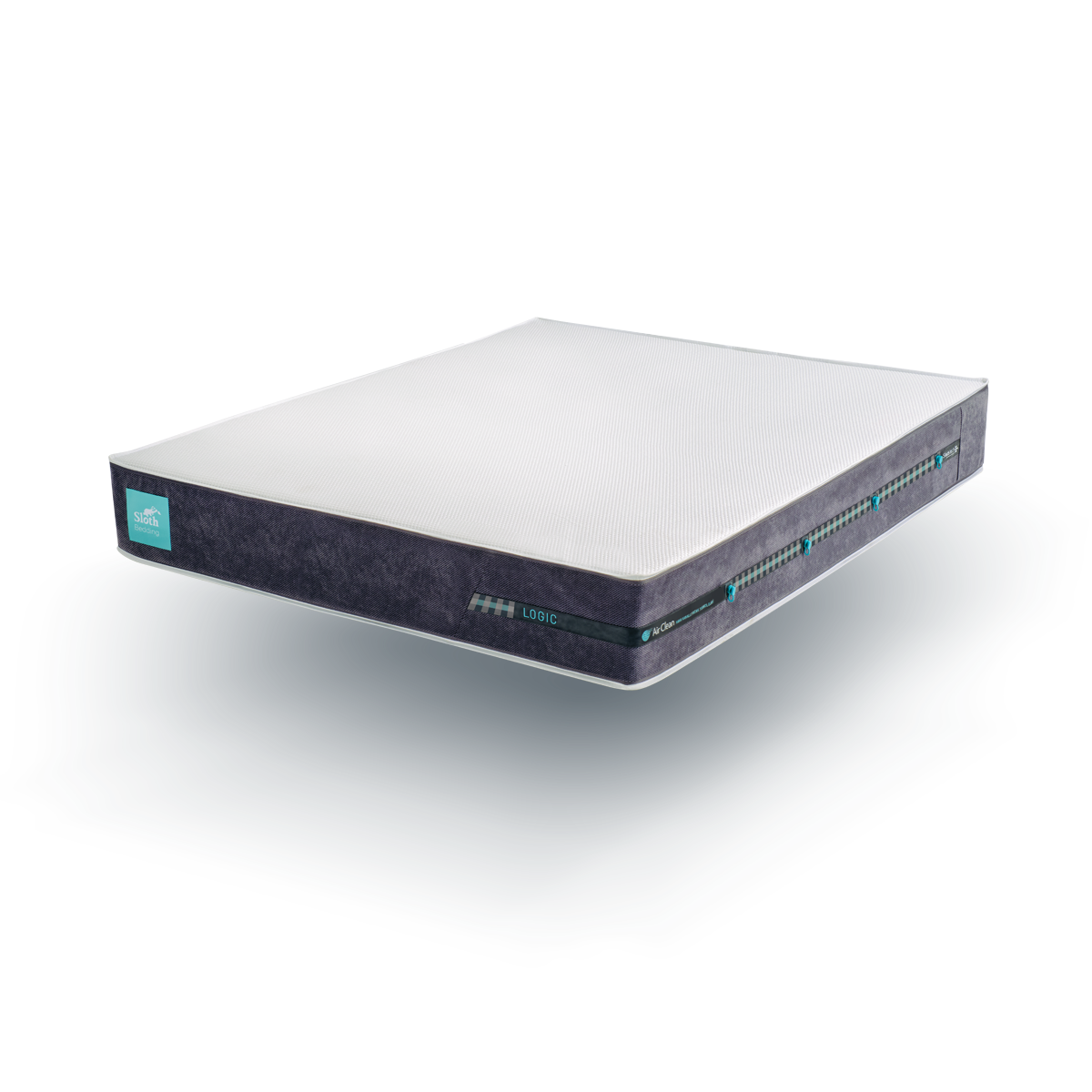
Some manufacturers integrate the ozone production mechanism directly into the mattress structure. SlothBedding's Air Clean Technology is one of the world's first examples of this category: the system is designed to keep the mattress's inner filling continuously hygienic and includes a mechanism that delivers ozone gas into the mattress in a controlled manner. This approach eliminates the penetration problems of externally applied devices.
Professional ozone cleaning services
High-concentration applications preferred by institutional users such as hotels and hospitals. It is performed by an expert team; the room is completely vacated, and measurements are taken after the process.
Benefits and areas of use
- Bacteria and dust mite control: Ozone oxidizes allergen compounds like the Der p1 protein in dust mite feces; this feature provides a practical advantage for users with asthma and allergies.
- Odor removal: Neutralizes odors of sweat, moisture, and organic origin without using chemical detergents.
- No chemical residue: Since it reverts to O2 at the end of the process, no substance remains on the surface.
- Cleaning hard-to-reach areas: Can reach inner filling areas where liquids or cloths cannot penetrate by acting as a gas.
- Baby and children's mattresses: Can be a preferred choice for parents wanting to ensure hygiene without using chemicals; however, the child must not be in the room during application.
- Long-term mattress life: Keeps mattress material healthy for a longer time by delaying moisture-induced mold formation.
Comparison of ozone cleaning and traditional methods
Traditional vacuuming and surface sprays cannot reach the inner mattress filling; therefore, they do not permanently reduce the dust mite population. Ozone cleaning differs in this respect, but only if the ozone concentration and application time are sufficient. Integrated systems, meanwhile, go beyond one-off applications due to their continuity.
Common misconceptions
- “Ozone is completely harmless”: False. Concentrations above 0.10 ppm can lead to coughing, chest tightness, and throat irritation when inhaled. People and pets must not be in the room during application.
- “Every ozone device is equally effective”: False. Low-power devices on the market may only penetrate a few centimeters of thick mattress filling.
- “Ozone cleaning makes the mattress completely sterile”: False. Sterilization is the one-hundred-percent destruction of microorganisms; ozone application does not guarantee this, but it significantly reduces the population.
- “You can lie on the bed immediately after the process”: False. The room must be ventilated for at least 30 minutes, and the bed should not be used until the ozone level falls to a safe limit.
- “Integrated systems carry the same risk”: Systems that are integrated into the mattress and operate in a closed circuit eliminate this risk when designed to prevent ozone from leaking into the living space.
Conclusion
Ozone mattress cleaning is a hygiene technology that can reduce bacteria, dust mite, and odor problems in the inner parts of the mattress where traditional methods cannot reach, provided it is applied at the right concentration and under controlled conditions. Safety depends largely on the application protocol: gas level, ventilation time, and the absence of humans in the environment are indispensable parts of this protocol.
For users, the most practical option is integrated systems that combine ozone production with the mattress structure. SlothBedding Air Clean mattresses aim to provide continuous hygiene by integrating this technology into the mattress. If you are evaluating portable devices for external use, make sure to choose certified products and follow the manufacturer's instructions completely.
Frequently asked questions
Is ozone mattress cleaning harmful to health?
When applied correctly, ozone mattress cleaning is not harmful to health. Danger arises from exposure to ozone above 0.10 ppm. Not being in the room during application and ventilating for at least 30 minutes after the process eliminates this risk.
Does ozone cleaning kill dust mites?
Ozone oxidizes and deactivates the allergen proteins in dust mite feces and can also destroy the mites themselves at high concentrations. The depth of the effect depends on the power of the device used and the duration of the application; integrated systems provide more consistent results in this regard.
How often should ozone mattress cleaning be done?
Monthly or seasonal use is recommended for applications made with external devices. Systems integrated into the mattress do not require an additional application schedule as they are continuously active.
Is ozone cleaning suitable for baby mattresses?
The baby must not be in the room during application. Once ventilation is complete and the ozone level has dropped to a safe limit, the mattress can be used. Baby mattresses with integrated Air Clean technology are designed in a way that does not require parental intervention for this process.
When can I lie on the mattress after ozone cleaning?
The room should be ventilated for at least 30 minutes, and it is expected that an ozone meter (if available) shows below 0.10 ppm. In integrated closed-circuit systems, this waiting period is not necessary because the gas does not leak into the living space.
Are all ozone devices of the same quality?
No. There are major differences between devices on the market in terms of concentration control, power output, and safety certification. Uncertified and uncalibrated devices carry risks of both insufficient cleaning and excessive ozone exposure. It is necessary to prefer products that have CE or similar certifications.

Share:
Self-Cleaning Beds: The 7 Best Options of 2026
Natural Latex Mattress vs. Memory Foam Mattress | SlothBedding