


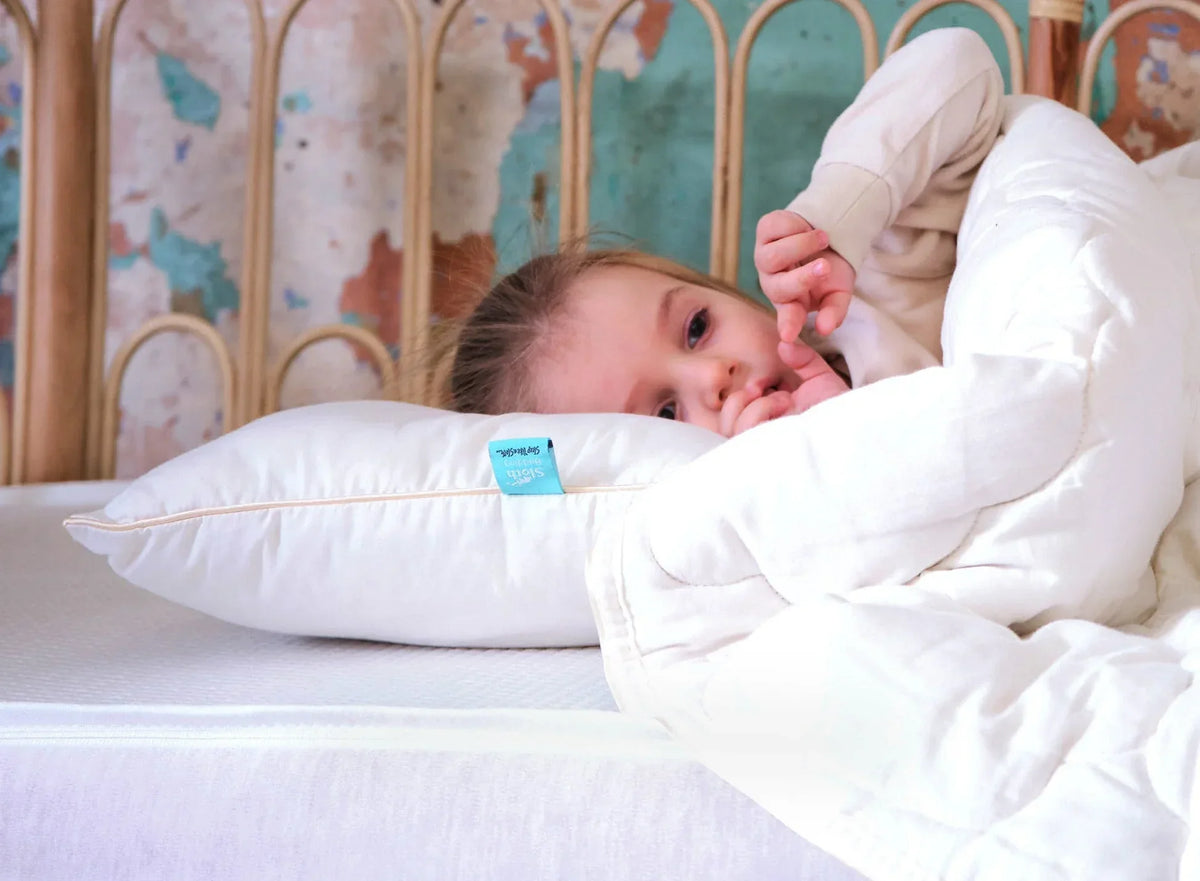
With the arrival of your little one, the rush to create the safest and most comfortable environment for them begins. One of the most important parts of this environment is undoubtedly the baby mattress. Since babies spend a large part of their day sleeping, it is vital that the mattress chosen not only meets safety standards but also supports their healthy development. So, what should a mattress for babies be like? What should you pay attention to when choosing a crib, cot, or baby mattress? Here is a comprehensive guide from A to Z for safe baby sleep.
Safety in a Baby Mattress
Your baby's safety comes first. Choosing a safe baby mattress minimizes potential risks and gives you peace of mind.
1. Golden Rules to Reduce the Risk of Sudden Infant Death Syndrome (SIDS)
SIDS is unfortunately one of the major causes of infant mortality. It is possible to reduce this risk by choosing the right mattress and sleep environment:
-
Back Sleeping: Babies should always be placed on their backs to sleep.
-
Empty Crib/Cot: There should be no items in the mattress that could create a choking hazard, such as pillows, duvets, blankets, or plush toys. Baby sleep sacks are a safer alternative.
-
Firm Mattress Surface: The baby mattress must be firm and flat. Soft mattresses into which the baby’s face could sink must be avoided at all costs.
-
Smoke-Free Environment: Smoking should not be permitted in the room where the baby sleeps or anywhere in the house.
2. Material Safety: Choices for Tiny Bodies
Because babies have sensitive skin and tend to put everything in their mouths, it is critical that mattress and crib materials are non-toxic.
-
Certified Paints and Varnishes: The paints and varnishes used should be water-based, free of lead and heavy metals, and certified to meet international safety standards such as EN 71-3.
-
Formaldehyde Emission: The formaldehyde emission of adhesives used in wooden products should be low or at the "E0" level.
3. Structural Safety (Crib/Cot Features)
-
Slat Spacing: To prevent the baby's head from getting stuck, the distance between the crib slats should be no less than 4.5 cm and no more than 6.5 cm.
-
Mattress and Cot Fit: The mattress should fit perfectly inside the cot, leaving no gaps at the edges where the baby could become trapped (generally, a gap of no more than two fingers is acceptable).
-
Sturdiness and Stability: The cot or crib should be sturdy and stable enough not to wobble or tip over with the baby's movements. Make sure the assembly is done correctly.
-
No Sharp Edges: All corners and edges should be rounded.
-
Adjustable Base Height (for cots): As your baby grows and starts to move, being able to lower the cot base reduces the risk of climbing out and falling.
Just as important as the cot or crib are the features of the mattress used inside it.
1. Firmness Level: Not Soft, Definitely Supportive!
The most important rule for babies is that the mattress must be firm. This both reduces the risk of SIDS and correctly supports the baby's spinal development. When you press down on the mattress, it should not sink immediately; it should maintain its form.
2. Breathability and Hypoallergenic Materials
-
Breathable Fabrics: The mattress cover and internal filling materials should allow for air circulation. This reduces sweating and ensures a more comfortable sleep.
-
Hypoallergenic Choices: To minimize the risk of allergies, mattresses and covers made from hypoallergenic, dust-mite-resistant materials should be preferred. Options like natural latex and organic cotton can be considered.
3. Washable Cover: Hygiene is Essential!
Baby mattresses can get dirty often. Having a mattress cover that can be removed and machine-washed provides great convenience in terms of hygiene. Using a waterproof but breathable mattress protector also extends the life of the mattress.
Crib or Cot? First Mattress Options
One of the questions on new parents' minds is, "crib or cot?" Both have different advantages and durations of use.
Cribs (For the First Months): Co-sleeping Comfort
-
Advantages: They are usually smaller and portable. Bedside crib models facilitate nighttime feedings. They can help the baby feel more secure during the first months.
-
Things to Consider: Once your baby starts moving, rolling over, or sitting up (usually around 4-6 months), it may become insufficient for safety, and a transition to a cot will be necessary. Rocking models must have a locking mechanism.
Cots (Long-Term Use): Adapting to Growing Needs
-
Advantages: They offer a wider and safer sleeping area. They can generally be used up to age 2-3, and some convertible models can be used even longer. The adjustable base height is an important feature.
-
Selection Criteria: It must meet all the structural and material safety standards mentioned above.
Extra Safety Tips for the Baby Mattress and Room
-
Keep the Mattress Empty: To reiterate; items such as pillows, duvets, cushions, plush toys, and thick bumper pads should absolutely not be in the baby mattress.
-
Room Temperature: The ideal temperature for a baby's room is between 20-22°C. The room should be neither too hot nor too cold.
-
Positioning the Bed: The bed should be positioned away from windows with direct sunlight, devices like heaters or air conditioners, and dangers such as dangling curtain cords.
-
Baby Monitor: You can use a video or audio baby monitor to keep an eye on your baby while you are in another room.
Checklist: What to Remember When Shopping for a Baby Mattress
-
Does the bed/cot meet current safety standards (e.g., EN 716, EN 71-3)? Ask for certifications.
-
Is the slat spacing safe (4.5 cm - 6.5 cm)?
-
Is the mattress firm and flat? Does it fit the cot perfectly, or are there gaps at the edges?
-
Do the paint, varnish, and materials used contain toxic substances?
-
Are there any sharp corners or edges? Is the structure sturdy and stable?
-
Is the mattress cover washable and hypoallergenic?
-
Is it easy and clear to assemble?
The Best Decision for Your Baby's Healthy and Safe Sleep
Choosing the right baby mattress is one of the most important steps you will take for your little one's health, safety, and comfort in their first months and years. By taking the information in this guide into account, you can find that perfect mattress where your baby will sleep soundly and peacefully without compromising on safety. Remember, an informed choice is the most valuable contribution you can make to your baby's healthy development.
Frequently Asked Questions (FAQ)
When should my baby move from a crib to a cot?
Answer: Generally, it is time to switch to a cot when babies start to roll over, sit up, or pull themselves up by holding onto the edges of the crib (on average around 4-6 months old), or when they reach the weight/height limit specified by the crib manufacturer. If your baby's movements are restricted in the crib or a safety risk arises, you should make the switch.
Is it safe to use a second-hand baby cot?
Answer: You should be very careful if you are considering using a second-hand cot. You must ensure that the cot meets current safety standards (e.g., EN 716), that all parts are complete and undamaged (no broken or cracked slats, missing screws, etc.), that the slat spacing is correct (4.5 cm - 6.5 cm), and that it is not a recalled model. The mattress must be new, as second-hand mattresses may not be hygienic and can lose their form over time, posing a risk to the baby's safety.
Should I use a bumper pad, pillow, or duvet in the baby's bed?
Answer: No. Health authorities and sleep experts recommend against using bumper pads, pillows, duvets, blankets, or soft toys in baby mattresses because they can increase the risk of suffocation, entrapment, and Sudden Infant Death Syndrome (SIDS). The principle "an empty crib is the safest crib" should be remembered. Using a sleep sack to keep the baby warm is a much safer alternative.
How firm should a baby mattress be? How can I tell if it is firm?
Answer: A baby mattress should be quite firm; this is critical to prevent the baby's face from sinking and to reduce the risk of SIDS. When you press your hand into the mattress, it should not easily sink, should hold its shape, and should return to its original form quickly. You should feel the same firmness when you press toward the edges. The label should state that it is "suitable for babies" and include information indicating that it meets relevant safety standards (e.g., EN 16890).
When can I give my baby a pillow and blanket?
Answer: Experts generally recommend not giving babies a pillow until they are 12-18 months old (ideally after age 2). A pillow can pose a risk of SIDS and suffocation. Instead of a blanket, especially during the first year, using a seasonally appropriate baby sleep sack that fits the baby well is the safest method. After age 1, you can consult your doctor about carefully using a very light and small blanket, but a sleep sack is still the preferred option.
Is it necessary to buy a mattress labeled "organic" or "natural"? What are the benefits?
An "organic" mattress (e.g., containing GOTS-certified organic cotton or latex) generally undergoes fewer chemical treatments and may not contain synthetic materials. However, the most important thing is that the mattress, whether organic or not, complies with safety standards (non-toxic materials, correct firmness, breathability). Do not just look at the "organic" label; check the other certifications and safety tests the product has.
My baby only sleeps on their stomach or side; should I keep turning them onto their back?
Babies should always be placed on their backs for every sleep (day or night). This is the most effective way to reduce the risk of SIDS. If your baby can roll over onto their stomach or side on their own (usually seen after 5-6 months when they can turn comfortably in both directions) and the sleep environment is completely safe (firm mattress, empty bed), you may not need to constantly turn them. However, it is best to discuss this with your pediatrician and follow their recommendations. In the first months, make sure to always place them on their back.


Share:
Tips for Waking Up Feeling Refreshed in the Morning
How Should You Choose Quilts and Pillows for Babies?