


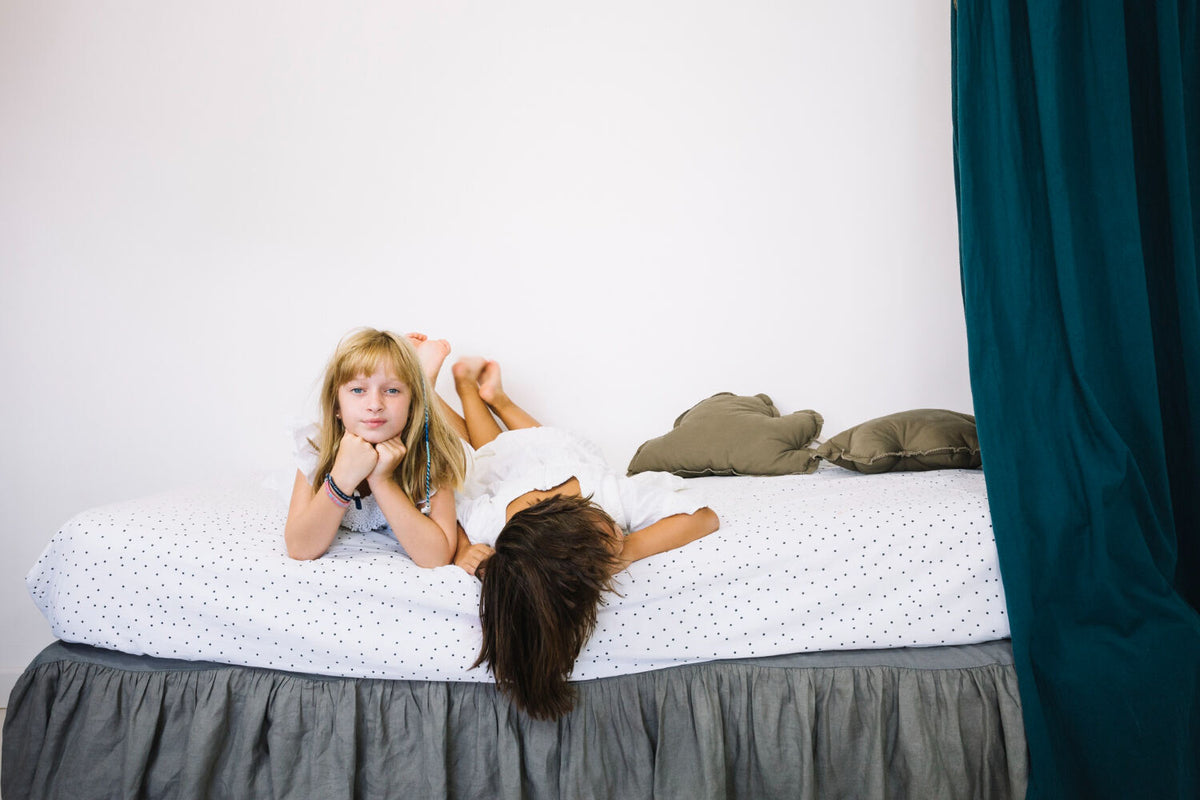
Creating a safe sleeping environment for children is one of the important issues that parents should pay attention to. Elements such as bed rails, bed height, and material selection play a critical role in terms of children's safety. In this article, you can find all the details you need to know about the safety of children's beds.
Safety Standards for Children's Beds
Children's beds must comply with international safety standards. These standards have been established to ensure that children are protected from accidents. Products with safety certificates should be preferred, and attention should be paid to quality when choosing a bed.
-
Beds with safety certificates (CE, EN 716) should be preferred.
-
Bed rails should be durable and secure.
-
The mattress surface should not be too soft to reduce the risk of suffocation.
Safety and Importance of Bed Rails
Bed rails are one of the important safety tools that prevent young children from falling out of bed. Rails allow children to sleep safely throughout the night and keep their movements under control during sleep.
-
Rails reduce the risk of children falling out of bed.
-
Height-adjustable rails are ideal for long-term use.
-
Firmly securing the rails to the bed increases safety.
Bed Height: How to Determine a Safe Height for Children?
Bed height is an important factor for children's safety. If the bed is too high, children can easily fall. Therefore, an age-appropriate bed height should be chosen.
-
For babies, beds should be close to the floor.
-
For toddlers, beds with an average height of 30-40 cm should be preferred.
-
Higher beds can be used for older children, but rails are necessary.
Choosing Safe Materials for Children's Beds
The materials used in choosing a bed are just as important as safety. Anti-allergic and antibacterial materials should be preferred, and materials containing chemicals should be avoided. Choosing materials suitable for children's skin sensitivity ensures they have a healthy sleeping experience.
-
Beds made from natural materials should be preferred.
-
Anti-allergic beds prevent allergic reactions.
-
Non-toxic materials are important for a healthy sleep.
Methods to Reduce the Risk of Falling from Bed
The risk of children falling out of bed can be significantly reduced through proper placement and the use of rails. The bed should be placed away from windows and dangerous areas. In addition, the risk of falling can be minimized by securing the bed rails.
-
The bed should be placed away from dangerous areas such as windows and radiators.
-
Bed rails should be securely mounted.
-
Dangerous objects should not be kept around the bed.
Different Types of Beds and Safety Features
Cribs and children's beds offer different safety features based on the child's age. While cribs used for babies are smaller with high sides, children's beds are generally wider and equipped with rails. Bed height and the use of rails should be adjusted according to the child's age.
-
Cribs have high sides that prevent babies from falling out.
-
Children's beds are generally wide and can be equipped with rails.
-
Low beds should be preferred for small children, and higher beds for older children.


Share:
Bed Cleaning and Long-Term Use Tips for Children
How to Improve Sleep Quality?