


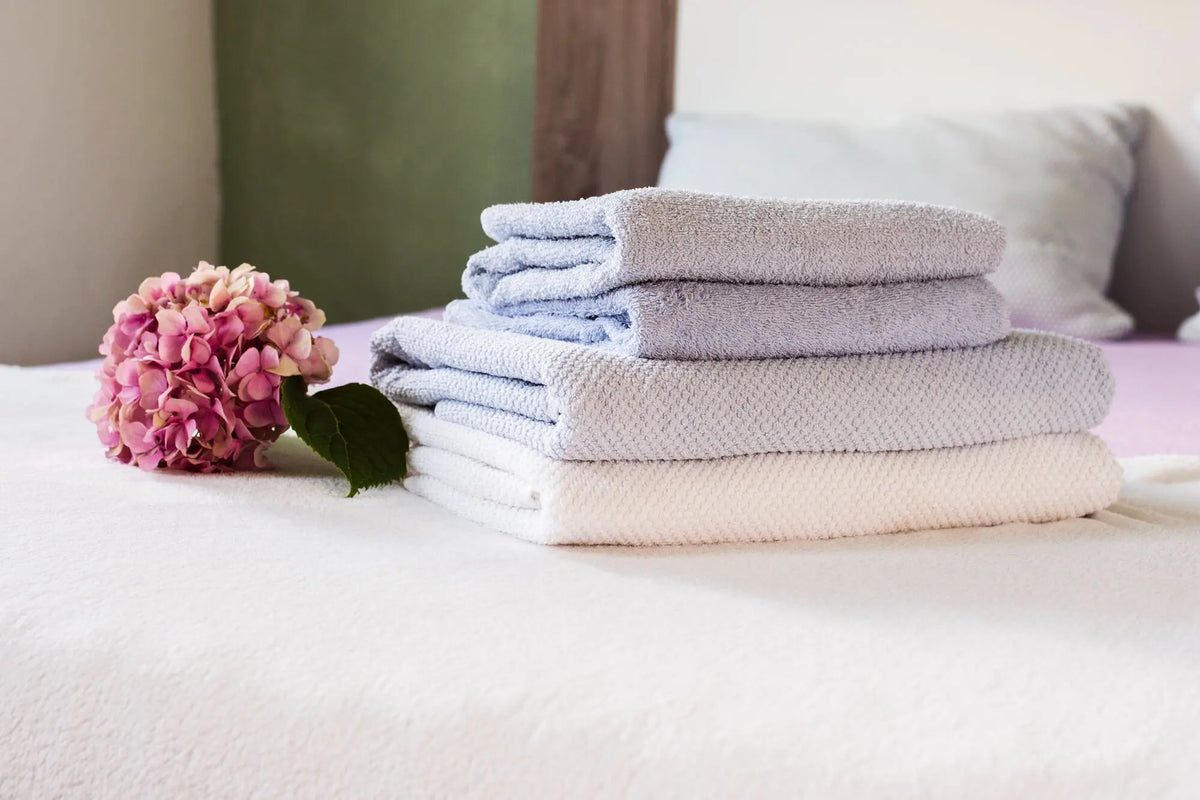
Towels are among the most frequently washed home textile products in daily use. However, using the wrong wash cycle and temperature can cause towels to harden, fade, or remain insufficiently hygienic. Choosing the correct wash cycle is essential to keep towels long-lasting, soft, and hygienic. In this guide, we discuss in detail how towels should be washed based on their fabric type, color, and usage.
Which Cycle Should Synthetic Towels Be Washed In?
Synthetic towels are generally lightweight, quick-drying products made from synthetic fibers such as polyester, nylon, or microfiber. While these towels are practical to use due to their softness and quick-drying properties, they are more sensitive to heat.
Therefore, synthetic towels should always be washed in a washing machine at low temperatures using delicate cycles. "Synthetic" or "Delicate" cycles are specially designed for such fabrics and provide cleaning without damaging the fabric structure.
The washing temperature should generally be kept between 30–40 °C. Higher temperatures can cause the synthetic fibers to degrade, leading the towel to harden.
For detergent, products formulated specifically for color protection or delicate fabrics should be preferred. These products both protect the synthetic texture and prevent the colors from dulling.
Furthermore, since synthetic towels dry much faster than cotton ones, the drying time can be kept shorter, which provides an important advantage in terms of energy savings.
Which Cycle Should Cotton Towels Be Washed In?
Cotton towels are the most commonly used type of towel in homes. Made from 100% cotton, these towels stand out for their high absorbency, softness, and durability. They also possess a structure that retains its form after washing.
The ideal washing option for such towels is the "Cotton" or "Intensive" cycle found on washing machines. These cycles wash for a longer duration at higher temperatures, ensuring that dirt, stains, and bacteria are cleaned effectively.
Cotton towels can generally be washed between 40–60 °C. Washing towels used for personal hygiene at 60 degrees yields safer results from a hygienic perspective. However, since frequent 60-degree washing can cause hardening in the fiber structure, alternating wash temperatures is recommended.
While there is no specific restriction regarding the detergent used, classic powder or liquid laundry detergents are generally sufficient for these types of towels. The use of fabric softener is optional, but it should be noted that regular use can reduce absorbency.
At What Temperature Should Towels Be Washed?
The washing temperature of towels plays a critical role in both cleaning efficacy and preserving the texture of the towel. Ideal temperature ranges may vary for towels with different colors and fabric structures. The higher the temperature, the higher the level of hygiene; however, some fabrics may not withstand these temperatures.
At What Temperature Should White Towels Be Washed?
White towels are suitable for washing at higher temperatures because they are more prone to staining. The ideal temperature for these towels is in the 60–90 °C range. High temperatures ensure that bacteria are killed and the towel is cleaner and fresher.
However, washing at 90 degrees continuously can cause the towel to wear out. Washing at 60 °C once a week and 90 °C once a month is generally sufficient.
At What Temperature Should Colored Towels Be Washed?
To preserve the texture and color of colored towels, 40 °C is considered ideal. Washing at a higher temperature can cause color fading and fabric deformation.
Using color-protecting detergents for such towels ensures that the color remains vibrant and the softness of the towel is maintained.
At What Temperature Should Black Towels Be Washed?
Black and dark-colored towels can easily lose their color at high temperatures. Therefore, washing between 30–40 °C is recommended.
Detergents specifically produced for black laundry are quite effective in preventing color fading. Additionally, washing them inside out also supports this process.
Should Colored Towels Be Washed with Whites?
Colored and white towels should absolutely not be washed together. Dye bleeding from colored towels into the water can cause white towels to turn grey, yellow, or dull. Even if it doesn't happen in the first wash, this mixing leads to color deterioration over time.
Colors must be sorted in every wash, and if necessary, color-catching sheets for colored products should be used.
At What Spin Speed Should Towels Be Washed?
The spin speed of towels is important for both effective water removal and maintaining the towel's shape. A spin speed between 800–1000 rpm is considered ideal for most towel types.
Washing at a higher spin speed removes water more effectively but can also damage the fiber structure, causing the towel to harden or thin out. For thick cotton towels, 1200 rpm may be preferred, but frequent use of this speed can shorten the lifespan of the towel.
Why Do Towels Harden?
The hardening of towels washed over time reduces usage comfort and decreases the towel's absorbency. The main reasons for this include excessive detergent use, washing with hard water, insufficient rinsing, and frequent high-heat drying. Additionally, overusing fabric softeners can coat the surface of the fibers, causing the towel to lose its natural quality.
How to Soften Hardened Towels?
It is possible to soften hardened towels, and natural methods are very effective for this. The most common method is to wash towels using only 1 cup of white vinegar without any detergent. Alternatively, adding baking soda can help clean the fibers. Using dryer balls in the tumble dryer also helps keep towels fluffy and soft.
Can Towels Be Washed at 90 Degrees?
Washing at 90 degrees is suitable for white and heavily soiled cotton towels. This temperature effectively kills germs. However, washing at this temperature constantly can cause the towels to harden and wear out. Washing at 90 °C once a month provides both hygiene and cleanliness without significantly shortening the towel's lifespan.
Can Towels Be Washed at 60 Degrees?
Yes, the ideal and safe washing temperature for towels is generally 60 °C. This temperature eliminates bacteria accumulated in daily use while preserving the towel's form and softness. Especially for hand, face, and bath towels, washing at 60 degrees is a highly effective and recommended practice for hygiene.
Which Cycle Should Towels Be Dried In?
If you are using a tumble dryer, towels must be dried on the correct cycle.
-
Cycle: Cotton or high-heat drying cycle
-
Extra Tip: Using dryer balls helps towels stay fluffy.
-
Caution: Over-drying can damage towel fibers, so they should be removed from the machine as soon as they are dry.
How to Whiten Yellowed Towels?
For white towels that have yellowed over time, there are several natural and effective methods:
-
Baking Soda and Lemon Juice: Add 2 tablespoons of baking soda and the juice of half a lemon to 1 liter of hot water and soak for 2 hours. Then proceed with washing.
-
Oxygen-Based Bleaches: Gentler than chlorine bleach, these products whiten without damaging the fabric.
-
Sun Drying: Drying white towels in natural sunlight also provides whitening over time.
How to Whiten Greying Towels?
To restore white towels that have turned grey due to incorrect washing:
-
Vinegar + Baking Soda Combination: Add 1 cup of vinegar and 1 tablespoon of baking soda to your detergent during the wash.
-
Removing Detergent Residue: Wash a few times using only vinegar without any detergent. This process cleans the residue accumulated in the fabric, allowing it to return to its natural color.
-
High Temperature + Oxygenated Bleach: Applying the process a few times with a 60 °C wash and suitable bleach yields effective results.
Details Affecting Your Towel and Sleep Quality
Soft and hygienic towels play an important role not only in the bathroom but also in the comfort of your pre-sleep routine. Especially after cleaning your face and body, washing the towels that come into contact with your skin correctly is critical for both hygiene and a restful sleep. A post-bath experience completed with soft, skin-friendly towels, when supported by a quality sleep product, ensures uninterrupted rest throughout the night.
Frequently Asked Questions (FAQ) About Washing and Drying Towels
Should towels be washed with fabric softener every time?
No, it is not recommended to use fabric softener every time you wash. Excess softener can coat the towel's fibers, reducing absorbency and causing them to harden over time. Less frequent use, such as once a month, is healthier.
How should newly purchased towels be washed the first time?
New towels must definitely be washed before their first use. A detergent-free wash with warm water and a small amount of vinegar in the first cycle removes production residues and increases the towel's absorbency.
Is a tumble dryer or natural drying better?
Both methods have advantages. While a tumble dryer makes towels fluffier, natural drying saves energy and is less damaging to the fabric. However, excessive drying in the machine can cause hardening.
Why do towels smell bad?
Insufficient rinsing, remaining damp, not being dried for a long time, and washing at low temperatures can cause bad odors. Towels should be dried completely, not left in the machine for a long time, and washed with vinegar regularly.
Why do colored towels fade over time?
Colored towels can fade over time due to frequent washing, high temperatures, and sun drying. To prevent this, washing at a low temperature, using color-protecting detergents, and air drying in the shade should be preferred.


Share:
What Is a Breathing Exercise? How Is It Done?
How to Dry a Blanket?